
The Pilates Principles
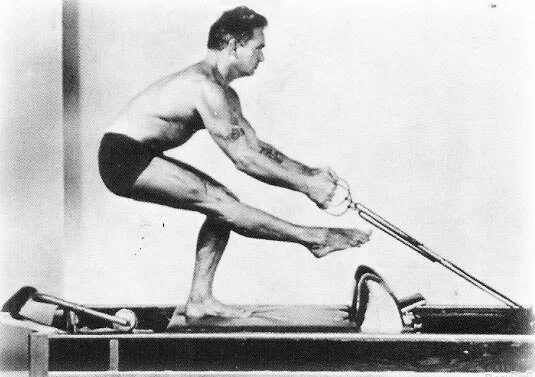
Joe Pilates on his original Reformer.
We’re starting off our new blog with the very basics of this amazing practice that has been on a rapid rise over the past couple of years. Why? Because it’s been on a rapid rise over the past couple of years.
It’s inevitable that with such explosive growth comes a deterioration of the essence of what makes this such a great practice.
Don’t get us wrong, we’re very happy to see Pilates integrated into more people’s lives. It has been and is a game changer for many who have struggled with a myriad of issues - be they physical, mental or emotional. We’ve seen it at our studios in Brunswick, Windham and Norway in equal measure.
We just want to ensure people are fully aware of and employing the fundamentals of the practice because they are the definition of Pilates. If you’re not practicing with these principles in the forefront of your mind each and every, you’re not doing Pilates. At least you’re not doing it as Pilates intended.
Joseph Pilates, founder of Pilates in the early 1920’s, was driven to make people’s bodies stronger, more flexible, and resilient to the aging process.
Back then, in the absence of social media and the idea of influencers, his focus was pure. He wasn’t just inventing exercises—he was building a method for how the body and mind should work together.
He was intent on ensuring that his practice wasn’t just:
random movements
strength training for aesthetics
mindless repetition
With these intentions, he established the core principles of breath, concentration, flow, centering, precision, and control.
“Pilates is complete coordination of body, mind, and spirit.”
The principles were not developed randomly. Each serves a very specific purpose and, most importantly, they should all be used in equal measure in all of your classes at Maine Pilates.
Here’s the why behind the 6 Pilates Principles:
1. To protect the body
Pilates wanted quality over quantity—fewer reps, done perfectly in order to prevent injury. If you’ve attended any of our classes, you know how seriously we take this!
2. To train the mind as much as the body
Pilates believed that without concentration and control, you weren’t really doing Pilates—just exercising your individual muscles. We believe, just like Pilates, that using concentration and control helps make your workout that much more effective and rewarding.
3. To build functional strength from the core
“It’s all about the core,” is probably what you heard in one of your first conversations about Pilates. But why the core? Centering your core, which Pilates believed is the “powerhouse” of our bodies, ensures movement starts from deep stabilizing muscles, not momentum or brute force. Pilates is not a “gym” workout. At our studios, each session includes full-body exercises. When done properly, your core will be engaged for most of the class!
4. To create (and enjoy) long-term physical health
Pilates wasn’t chasing short-term fitness gains. He believed his method could:
improve posture
enhance breathing
support spinal health
slow physical decline with age
5. To keep the method consistent
This was really important to Pilates and it’s really important to us. He implemented the principles as guardrails so instructors didn’t dilute the method over time. Unfortunately, the zeal to open studios in one of the fastest growing segments of the health and wellness industry has caused that to happen.
In short, the principles exist so Pilates stays Pilates—and not just another trendy workout. And Maine Pilates is 100% in agreement and support of these principles because we know, at the end of the day, they’re what makes it so effective.
UP NEXT:
We’re going to be taking a diver deeper into each of the 6 Pilates Principles. Is there anything you would like us to include? Do you have any questions for our Founder, Dori? If so, drop them in the comments!
